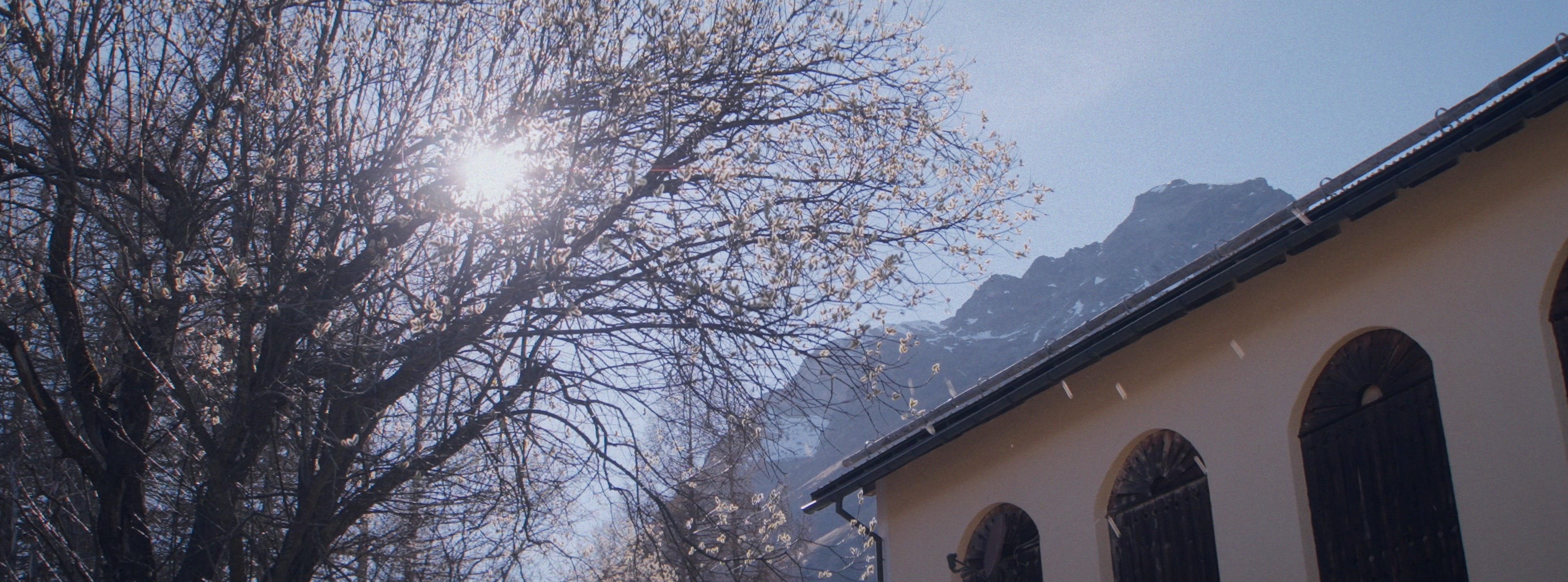
Prümavaira
Spring arrives on the Traunter Ovas farm.

“Have you seen the moon?” Catherine asks.
I look up. First quarter. Silver sliced clean in half. In the foreground, still-wintered larch trees are preparing to reveal themselves—holding on a little longer at this high altitude.
She walks across the field to help Gian, who steps out of the big green tractor and begins unwrapping a hay bale for the horses. There’s work to do.
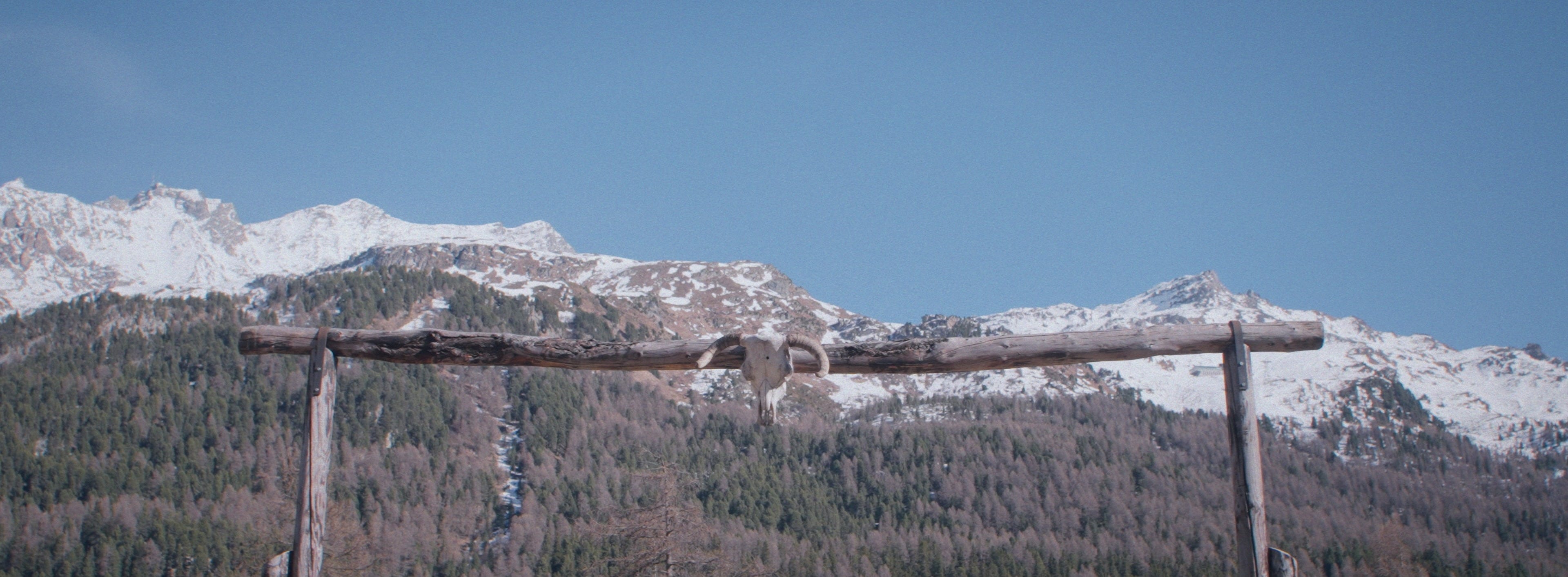
A cow’s skull hangs from a wooden frame on the entrance to the meadow, suspended, watching. Another season begins.
I arrive in the afternoon. The sun seems to climb higher each day, gathering strength. Beige and brown grass is turning to small green shoots. The winter is long here, and spring—prümavaira—arrived as a relief.
Gian, the father, steps out of his pickup truck.
“Scu vo que?!” I ask.
“Bain, grazcha!” He responds enthusiastically.
Slowly, the language begins to reveal itself.
Stepping inside, Gian flips a switch that begins moving the garage door open. “Look!” he shouts, pointing the other way. With a man of this size—quite possibly over 2 metres tall—every expression becomes a vocal boom.
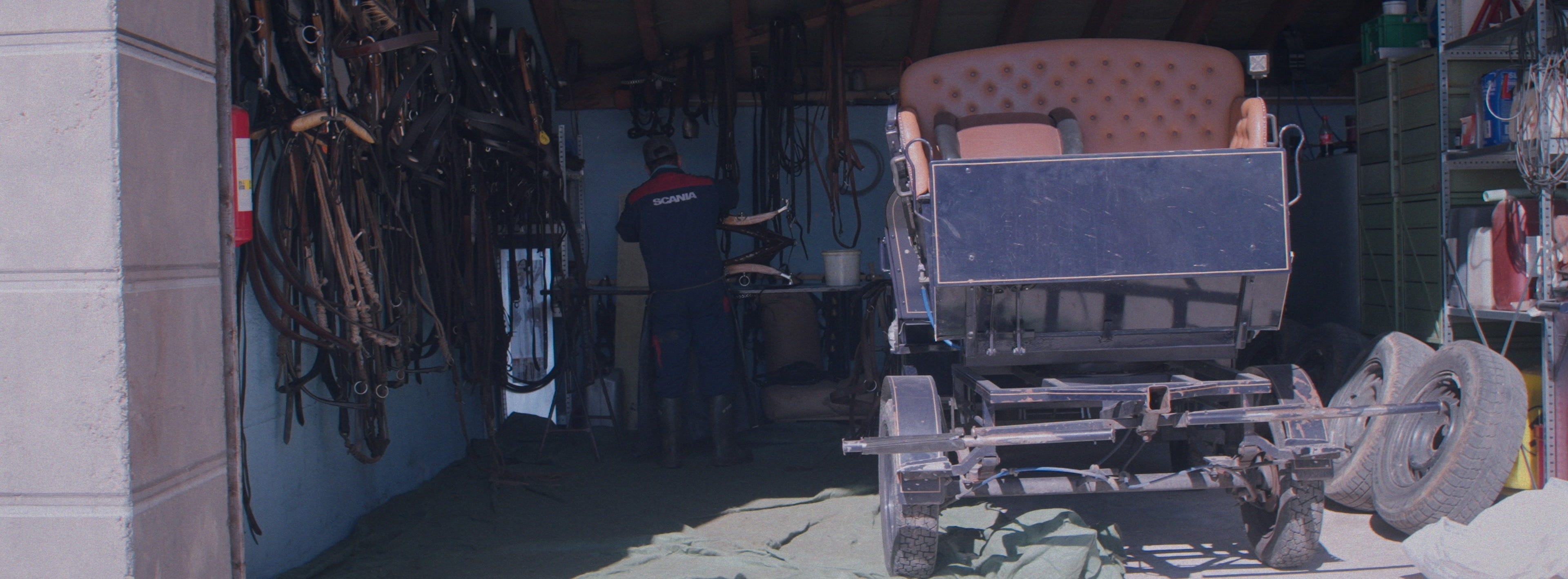
Inside, Luciano, one of the farm’s employees, is oiling the leather from the horse carriages.
This is no ordinary garage. Tools hang from every wall—hammers, pliers, drills, leather straps, bells—the architecture of an alpine working life. The harnesses are handcrafted from wood, leather and metal, custom-built for each horse.
“These two, twelve thousand francs!” he says. Made by artisans in St. Gallen.
Today is one of the highlights of the year: the day the horses are released onto pasture after winter. Adriano calls it their “holiday” after a long winter of work, taking the tourists up to Fex. There is anticipation in the air. The family moves with purpose and excitement.
We walk over to the horse pen and get ready. It feels significant. This moment only happens once. We coordinate ourselves deliberately. Cameras, gates, bodies. Bracing.
“Achtung! Go!” Gian shouts, as he pulls open the metal fence.
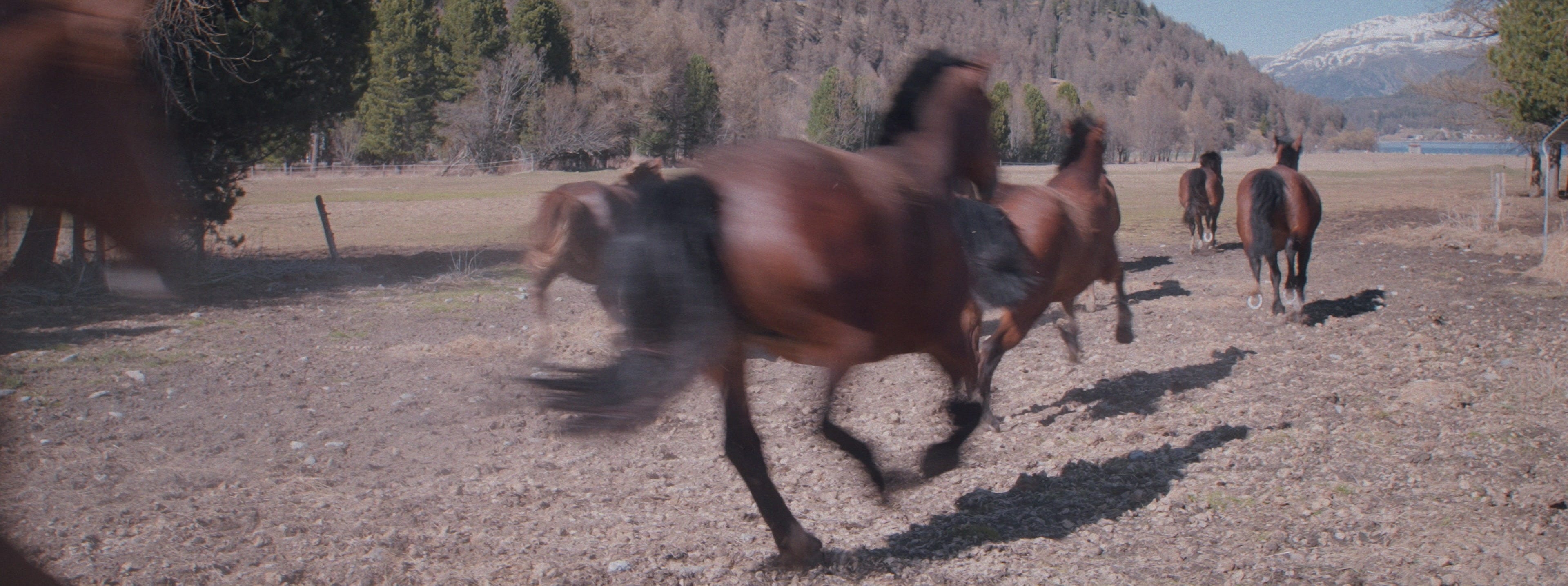
One by one, the horses trot, gallop, then break out into a full sprint across the field. The strike of hooves on soft dirt rings out across the valley.
The Sils plain: a sprawling meadow stretching from lake to lake, mountain to mountain. I watch from above through my drone as the horses begin to circle wildly across the field, carried by some irrepressible energy. Everyone is smiling.
“Woohoo!” Adriano shouts. Spring is here.
I jump into Catherine’s dusty BMW and she drives us over to the other side of the farm. The horses have slowed down and are relishing the fresh meadow. Lej da Silvaplauna shimmers, glacial blue in the background.
Dust spirals in the air. That famous wind from Maloja pass, a little less punishing now that the temperature is rising. A crumpled Swiss flag is hanging from the window, turned in on itself from the breeze.
“As a farmer, there’s always something to do…” Adriano once said to me.
Gian is already moving onto the next job. A willow tree is shedding blossom, carried away into dust and space and silence.