
Sleeper Village
A place suspended between continuity and disappearance.

There is a small village in a Swiss valley, not far from the borders of Italy and Austria.
In winter, it stays in shaded, mountain-enshrouded darkness, until the sun appears from the south-facing peaks in mid-afternoon. Once in a while, a passing train clatters along steel tracks, buzzing with electricity in an otherwise static place.
On Christmas, the mostly-empty farmhouses swell once again with people, only to remain vacant for the coming months.
Some call it a sleeper village, for these streets remain mostly empty aside from the few farmers who still work the land, and the tourists who come and gaze at the sgraffito-engraved buildings.
What remains resembles a husk. The beauty is still present. The carved façades, the painted shutters, the mountain silence. But inside, much has been hollowed away.
A hundred years ago, cars were banned here. The villagers were disturbed by these combustion-powered machines—for rapid changes were not welcomed here, and they wished to protect the chickens that roamed the streets. When questioned on their stance, some had answered: “this is how it is, this is how we live.”
A hundred years later, the automobiles have won. Many families have left, deciding to sell and move to the cities. The most elegant houses with curving plaster and detailed etchings have gone to the highest bidders—people who don’t live here.
On the streets, signs point towards what is deemed important. A track for snowshoeing, a trail for mountain biking. Holiday homes for rent, some of which appear to outnumber inhabited houses.
When seen from above, smoke rises from only a few chimneys.
The large, former farmhouses are inhabited for two weeks a year. An electric Porsche sits outside, barely fitting on the cobbled driveway. For a brief weekend, a warm glow emanates from the small windows. Parents and children go skiing, enjoying what little snow now falls, before heading back to where they came.
The village falls quiet.
The slush from melting snow gradually trickles down the salted asphalt roads. A local goat farmer scrapes the edges with a shovel—tending to a street that fewer people still call home.
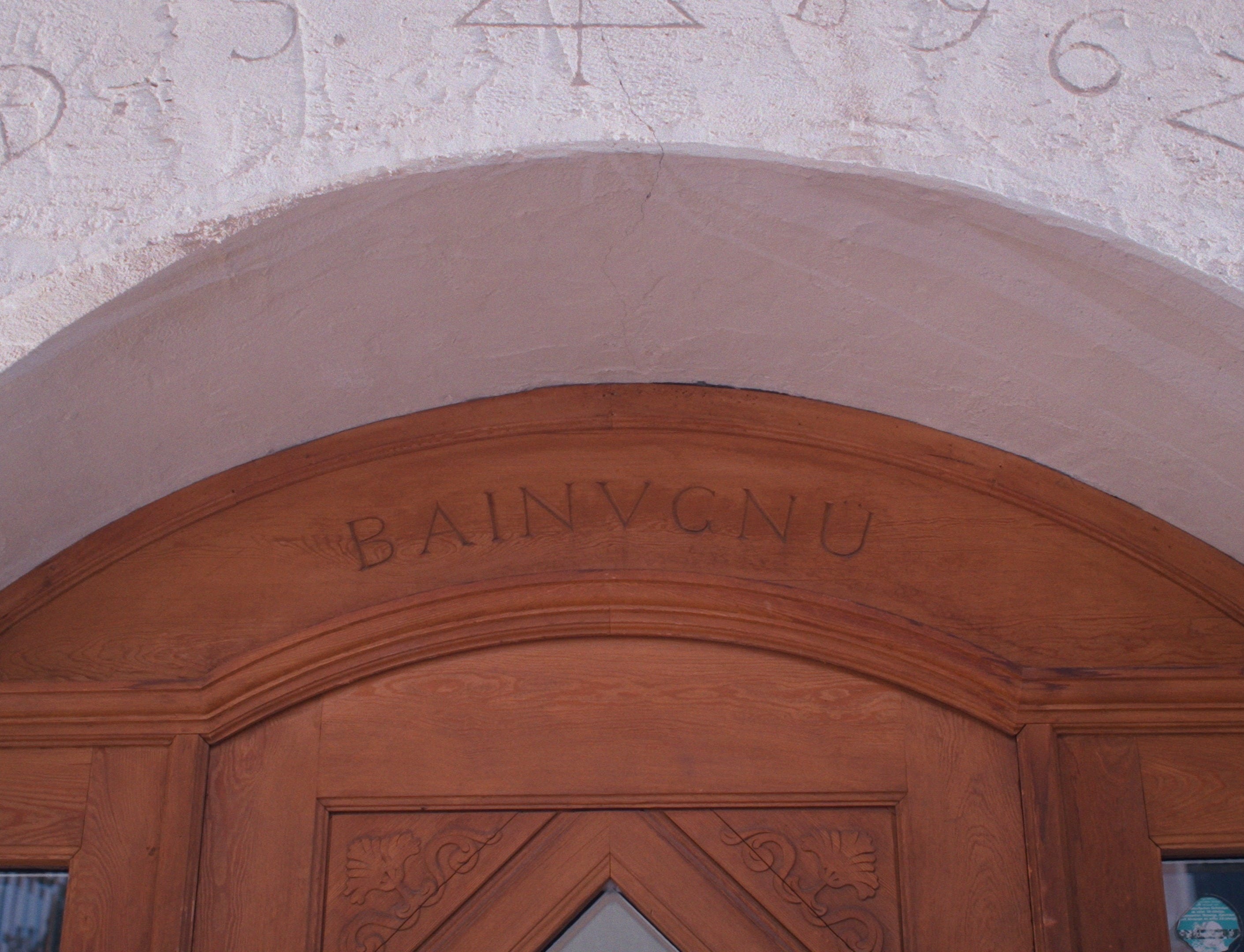
“Welcome” in Vallader Rumantsch engraved into a stone pine doorway.
Wow